
Why Your Thermostat Reads the Wrong Temperature (and How to Fix It)
Have you ever walked into your living room feeling a distinct chill, only to look at your wall and see the temperature display claiming it is a cozy seventy-two degrees? Or perhaps you are sweating through a humid afternoon in Hillsborough Township, yet your system thinks the house is perfectly cool. When your thermostat reads the wrong temperature, it is more than just a minor annoyance. It directly impacts your daily comfort, puts unnecessary strain on your HVAC equipment, and can quietly drive up your monthly heating and cooling energy bills.
At Fontaine-Repair Heating A/C, we receive countless calls from homeowners frustrated by uneven temperatures and confused by their system's behavior. A thermostat acts as the brain of your entire heating and cooling system. When it receives or processes inaccurate information, your central AC or furnace cannot perform its job efficiently. This can lead to excessive cycling, reduced energy efficiency, and premature wear on critical components.
Understanding the reasons your thermostat is not matching room temperature is the first step toward restoring your home's comfort. Whether you are dealing with an aging manual dial or a modern digital display, temperature discrepancies are common but highly solvable. Let us explore why this happens, how you can perform some basic thermostat temperature sensor troubleshooting, and when it might be time to call in the professionals for a permanent solution.
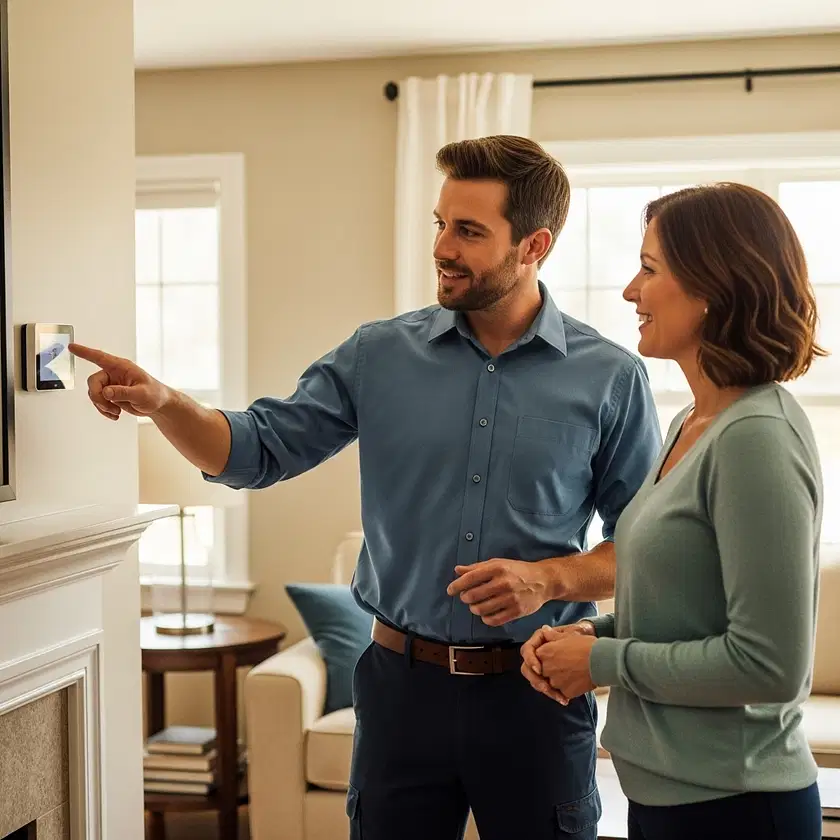
Common Reasons Your Thermostat is Not Matching Room Temperature
Before you assume your entire heating or cooling system is failing, it is important to look at the immediate environment surrounding your wall unit. Environmental factors are often the primary culprits behind inaccurate readings.
One of the most frequent issues we see is poor installation location. If you frequently notice your thermostat reading higher than actual room temperature during the summer months, direct sunlight might be the cause. If the sun hits the plastic casing during the day, the internal sensors will register the heat of the sunbeams rather than the ambient air of your living space. This tricks your central AC into running far longer than necessary, making the rest of the house uncomfortably cold.
Similarly, drafts play a major role in skewed readings. If your device is located near a poorly sealed window, an exterior door, or right next to an air supply register, it will react to the immediate draft rather than the average temperature of the room. Homeowners in older homes throughout Central Jersey often experience this during the winter, where a cold draft from a hallway makes the heating system run constantly.
Dust and debris accumulation inside the unit is another common hidden factor. Over time, household dust, pet dander, and airborne particles can coat the delicate mechanical or electronic temperature sensors inside the casing. This insulating layer of grime prevents the sensor from accurately reading the ambient air. Gently removing the cover and dusting the interior with a soft brush or compressed air can sometimes instantly resolve the discrepancy.
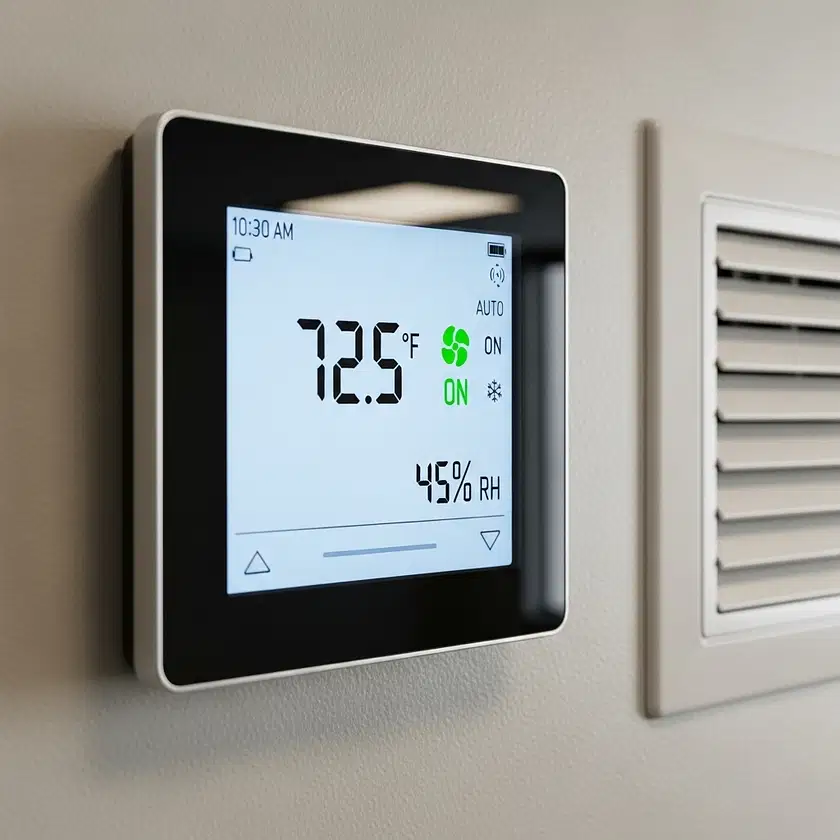
Thermostat Temperature Sensor Troubleshooting and Calibration
If the location seems fine and the unit is clean, the next step in thermostat temperature sensor troubleshooting is testing the calibration. Calibration simply means checking if the device's internal sensor matches the actual room temperature and adjusting it if necessary.
To figure out how to calibrate a home thermostat, you will first need a highly accurate ambient room thermometer. Tape the thermometer to the wall directly next to your thermostat. Wait approximately fifteen to twenty minutes for the thermometer to acclimate to the wall's temperature. Once the time has passed, compare the two readings. If they are off by more than a single degree, your unit is out of calibration.
For older mechanical models, calibration usually involves locating a small calibration screw inside the device (often near a coiled bimetallic strip). Using a precision screwdriver, you can gently turn the screw to adjust the reading until it matches your control thermometer.
Modern digital models often have a calibration feature built into their menu settings. You can usually access an installer or advanced settings menu to offset the displayed temperature by a few degrees to match reality. However, if you are unsure about navigating these advanced menus or adjusting mechanical components, it is always safest to rely on professional hvac services to handle the adjustments without risking damage to the logic board.
Upgrading to Smart Technology
Many consumers today are looking for ways to lower their monthly energy bills while gaining more control over their indoor environment. If your current unit is constantly losing calibration, struggling to hold a temperature, or simply outdated, investing in smart home integration is a wise choice.
Modern IoT-enabled smart thermostats do much more than just read the temperature. They learn your family's routine, provide predictive maintenance alerts, and can even monitor indoor air quality. More importantly, many of these systems utilize remote room sensors. Instead of relying on a single temperature reading from a hallway, you can place remote sensors in your bedrooms or living areas. The system will then average the temperatures or focus on conditioning the specific rooms you are actively using. This eliminates the hot and cold spots that frustrate so many homeowners.
We understand that some folks are hesitant about the upfront cost of new technology. However, the long-term energy savings, improved comfort, and available rebates often make upgrading a financially sound decision. Furthermore, keeping up with regular maintenance by enrolling in a comprehensive hvac maintenance plan ensures your new controls and your residential hvac equipment communicate perfectly year after year.
When to Call the Professionals for Thermostat Repair or Installation
If you have tried cleaning the unit, blocking drafts, and attempting basic calibration without success, there may be a deeper electrical or hardware issue at play. Faulty wiring, a failing logic board, or incompatible equipment can all cause erratic behavior that requires expert hvac repair. Attempting complex electrical work on your own can lead to blown fuses or damage to your expensive heating and cooling equipment.
At Fontaine-Repair Heating A/C, our licensed and background-checked technicians are experts at diagnosing control issues. Whether you need a simple thermostat repair to fix a loose connection or a complete thermostat installation to upgrade to a high-efficiency smart model, we provide transparent, upfront pricing with no hidden surprises.
Don't let a confused temperature sensor dictate your family's comfort or drive up your utility costs. If you are tired of battling your indoor climate anywhere in Somerset County or the surrounding areas, reach out to our friendly team today. We offer fast, reliable solutions to keep your home perfectly comfortable in every season. Visit our contact us page or call us to schedule your comprehensive heating repair or cooling consultation.