
Is Your Furnace Safe? Warning Signs of a Cracked Heat Exchanger
As the crisp fall air settles over Central Jersey and we begin preparing our homes for the colder months, a reliable furnace becomes essential to our daily comfort. Most of us simply adjust the thermostat and expect warm air to flow, but the mechanical processes working behind the scenes require careful attention. Before you commit your system to heavy daily use, it is critical to ensure it is operating safely and efficiently.
One of the most dangerous and commonly misunderstood issues a homeowner can face is a compromised heating system. While there are many routine repairs, nothing raises a red flag quite like a failing heat exchanger. At Fontaine-Repair Heating A/C, we believe in empowering our community with the knowledge needed to maintain a safe home environment. In this comprehensive guide, we will explore exactly what this critical component does, why it fails over time, and the subtle warning signs you should never ignore to keep your residential HVAC system running safely throughout the winter season.
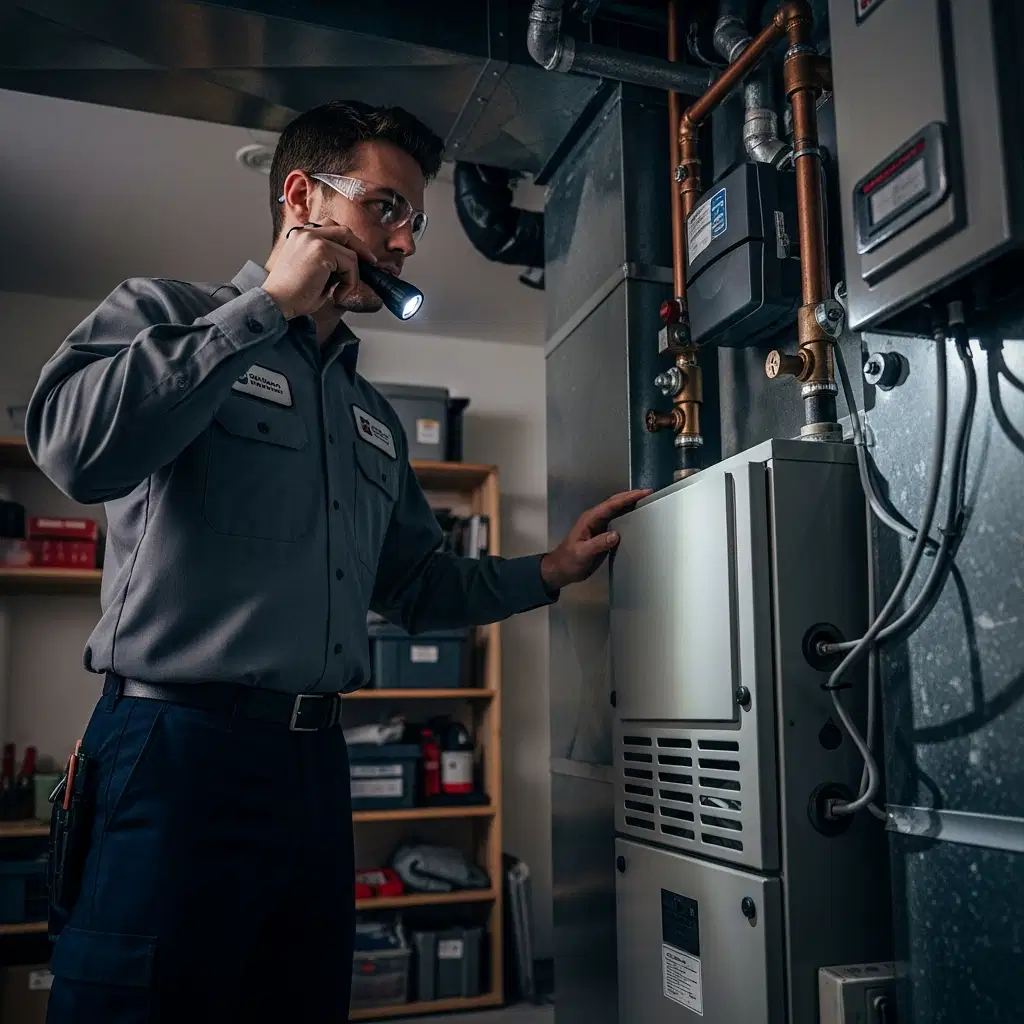
The Heart of Your Heating System: What Is a Heat Exchanger?
To understand how to tell if a furnace heat exchanger is cracked, it helps to first understand its vital role in your home's heating process. The heat exchanger is essentially the heart of your gas furnace. It is a series of metal coils or tubes that separate the combustion process from the air you actually breathe.
When your furnace turns on, burners ignite gas inside the heat exchanger. The metal walls become extremely hot. Meanwhile, your blower motor pushes cold indoor air over the outside of these hot metal walls, warming the air before circulating it through your air ducts. Crucially, the toxic byproducts of the combustion process—including carbon monoxide, sulfur dioxide, and nitrous oxide—remain trapped inside the heat exchanger and are safely vented out of your home through a flue pipe.
Why Do They Crack?
A standard heating system typically lasts 15 to 20 years, provided it receives regular maintenance. Over this lifespan, the metal of the heat exchanger goes through thousands of heating and cooling cycles. This constant expansion and contraction eventually leads to metal fatigue.
Furthermore, neglecting simple maintenance tasks like replacing your home's air filters can accelerate this damage. A clogged filter severely restricts airflow, causing the system to overheat and putting immense thermal stress on the metal, leading to premature stress fractures.
Symptoms of a Cracked Heat Exchanger in a Gas Furnace
Identifying a structural failure in your furnace is rarely as obvious as a loud breakdown. The signs are often subtle at first. If you are wondering what symptoms of a cracked heat exchanger in a gas furnace to look out for, pay close attention to the following indicators:
1. Changes in the Burner Flame
If you remove the front panel of your furnace while it is running, you should see a steady, bright blue flame. A blue flame indicates complete, safe combustion. If you notice a flickering, dancing, or yellow flame on a gas furnace burner, it is a serious cause for concern. While this can sometimes indicate a dirty burner that simply needs cleaning, it frequently means that ambient oxygen is leaking into the combustion chamber through a crack in the heat exchanger, disrupting the flame.
2. Unexplained Soot Buildup
When a furnace is not combusting gas properly due to a structural crack, it will produce excess soot. You might notice fine, black powder accumulating inside the furnace cabinet, around the exterior vents, or even near the supply registers in your living spaces. This soot is a byproduct of incomplete combustion and strongly indicates a safety hazard.
3. Strange, Unpleasant Odors
Your heating system should never produce persistent smells. A failing heat exchanger often releases unpleasant odors that smell metallic, similar to formaldehyde, or like exhaust fumes. If you notice these smells circulating through your air vents, turn the system off immediately.
4. Carbon Monoxide Alarms and Physical Symptoms
The most severe consequence of a cracked unit is the release of carbon monoxide into your home. Carbon monoxide is an invisible, odorless gas. If your home's carbon monoxide detectors go off, evacuate the house immediately and contact emergency services. Even without alarms, if your family experiences frequent headaches, nausea, dizziness, or flu-like symptoms that miraculously disappear when you leave the house, a cracked heat exchanger could be the culprit.

The Importance of Professional Diagnosis
In today's highly competitive market, finding trustworthy and skilled labor can be a major pain point for homeowners. Unfortunately, some fly-by-night contractors might falsely claim your heat exchanger is cracked to push a completely unnecessary and expensive replacement. This is why it is absolutely vital to rely on licensed, NATE-certified technicians who prioritize transparency.
At Fontaine-Repair Heating A/C, we utilize advanced IoT diagnostics and specialized digital inspection cameras to physically show you the condition of your equipment. We take the guesswork out of the equation. If we detect an issue, we provide transparent pricing and explain all your options.
If a crack is confirmed, the unit is unsafe to operate. Depending on the age of your system, you will need extensive heating repair or a full system replacement. Should a replacement be necessary, our team will guide you through upgrading to modern, energy-efficient options, including high-efficiency heat pumps, and help you navigate available utility rebates and federal tax credits under the Inflation Reduction Act to make the investment far more affordable.
Don't Leave Your Home's Safety to Chance
Your family's health and comfort are simply too important to leave to chance. Regular seasonal maintenance is the single most effective way to catch metal fatigue and minor fractures before they develop into dangerous, home-threatening emergencies.
If you have noticed a yellow flame, strange odors, or simply haven't had your system serviced in a while, do not wait for the freezing temperatures to arrive. Whether you live right here in Hillsborough Township, are commuting up the Parkway, or reside anywhere in our surrounding service areas, Fontaine-Repair Heating A/C is here to help. We offer 24/7 emergency service availability and prompt response times because we know that heating emergencies don't wait for convenient hours. Contact us today to schedule a comprehensive furnace inspection and ensure your home remains a safe, warm haven all winter long.