
Beyond Temperature: Why Your Home's Air Quality and Humidity Matter
We’ve all been there. You come home after a day out, maybe even a trip down the shore, and walk into a house that feels cool but somehow… sticky. You check the thermostat, and it’s set to a comfortable temperature, but you still feel clammy and uncomfortable. This is a classic sign of one of our notorious New Jersey humid summers winning the battle against your air conditioner. True home comfort isn't just about the number on the thermostat; it's about the overall quality of the air you breathe, and humidity plays a huge role. For homeowners here in the Middlesex County area, understanding and controlling indoor air quality (IAQ) is the key to unlocking a truly comfortable and healthy living space. In this guide, we'll explore the signs of poor air quality and high humidity, explain why it happens, and provide practical solutions to help you breathe easier.

The Invisible Problem: Recognizing Poor Indoor Air Quality
Because you can't always see the contaminants in your air, it's easy to overlook the signs of a problem. You might get used to a certain stuffiness or a lingering odor, but these subtle clues can point to underlying issues with your home's air. Poor IAQ isn't just a matter of comfort; it can impact your health, especially for family members with allergies or asthma.
Here are some common signs that your indoor air quality could use some attention:
- Increased Allergy Symptoms: If you find yourself sneezing, coughing, or dealing with watery eyes more often at home, airborne allergens like dust, pollen, and pet dander could be the culprits.
- Persistent Odors: A musty or stale smell that never seems to go away can indicate the presence of mold or mildew, often thriving in damp, humid environments.
- Excessive Dust: Are you constantly wiping down surfaces only to see a new layer of dust appear almost immediately? Your HVAC system could be circulating dust particles throughout your home.
- Condensation on Windows: While some condensation is normal, excessive moisture on your windows is a red flag for high indoor humidity, which can lead to mold growth and other issues.
- General Discomfort: Sometimes, the sign is just a feeling. If your home often feels stuffy, stagnant, or clammy, it's a strong indicator that your air isn't circulating or being filtered and dehumidified properly.
The Humidity Factor: Why Your AC Is Struggling
One of the most common questions we hear is, "Why is my AC running constantly but not cooling my house effectively?" More often than not, the answer is humidity. Your central air conditioning system has two primary jobs: to lower the air temperature and to remove moisture from the air. During our intensely humid summers, your system has to work overtime just to pull water vapor out of the air. When it's overwhelmed, it can't dedicate enough of its cooling power to actually lowering the temperature, leaving you feeling sticky and warm.
Several factors can contribute to this problem. An improperly sized unit—either too large or too small for your home—can struggle to manage humidity levels effectively. An older system may have lost some of its efficiency, or it might be in need of professional attention. Simple issues like a clogged filter or dirty coils can severely restrict airflow and reduce your AC's ability to dehumidify. This is why a prompt and professional AC repair can make a world of difference, not just for the temperature but for the overall feel of your home. A well-maintained system is your first and best defense against that oppressive summer humidity.
Your Action Plan for Fresher, Healthier Air
Improving your home's air quality doesn't have to be complicated. By taking a few key steps, you can create a healthier and more comfortable environment for your family. It all starts with the system that moves air throughout your entire home: your HVAC system.
1. Start with the Source: Ductwork Your air ducts are the respiratory system of your home. Over time, they can accumulate dust, debris, pet dander, and other allergens. Every time your system kicks on, it can circulate these pollutants into the air you breathe. A professional duct cleaning is one of the most effective ways to immediately improve your IAQ by removing years of buildup from your system.
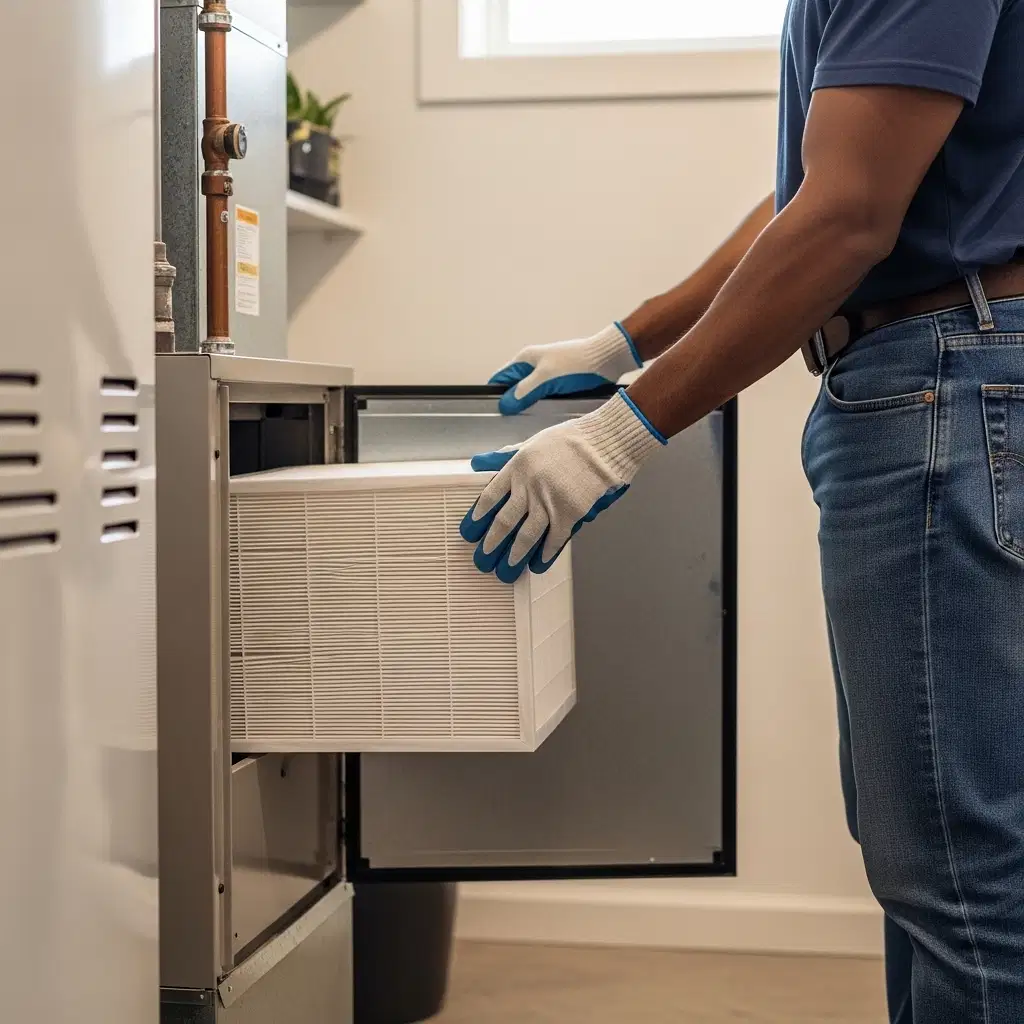
2. Consider Whole-Home Solutions For persistent humidity and air quality issues, you can integrate solutions that work with your existing HVAC system. A whole-home dehumidifier, for example, works in tandem with your air conditioner to specifically target and remove excess moisture. This allows your AC to focus on cooling, improving both comfort and energy efficiency. Additionally, advanced media filters and UV air purifiers can be installed within your ductwork to capture and neutralize microscopic particles, viruses, and bacteria that standard filters might miss.
3. Don't Forget Maintenance The foundation of good air quality is a well-maintained system. Regular tune-ups ensure your equipment is clean, running efficiently, and capable of filtering and dehumidifying your air properly. A trusted professional can spot potential issues before they become major problems, ensuring your residential HVAC system is ready to handle whatever the New Jersey weather throws at it.
Breathe Easier with Professional HVAC Solutions
True home comfort goes far beyond the temperature setting. It’s about creating a healthy, pleasant environment where you and your family can feel your best. By paying attention to indoor air quality and taking control of humidity, you can reduce allergens, eliminate odors, and make your home feel more comfortable, all while improving your HVAC system's efficiency.
Ready to stop fighting the humidity and start breathing easier in your Middlesex County home? Whether you need a comprehensive system evaluation, professional duct cleaning, or want to explore advanced indoor air quality solutions, the expert team at Fontaine-Repair Heating A/C is here to help. Contact us today to schedule a consultation and discover the difference clean air can make.